How it works
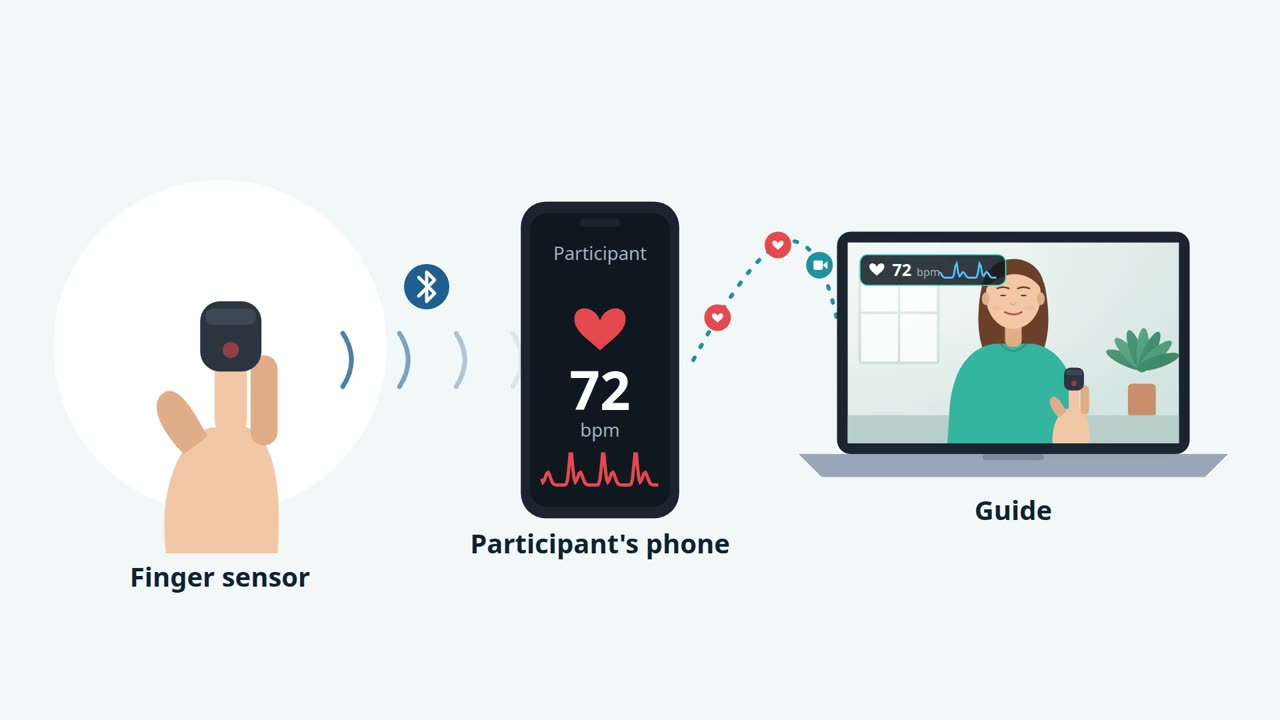
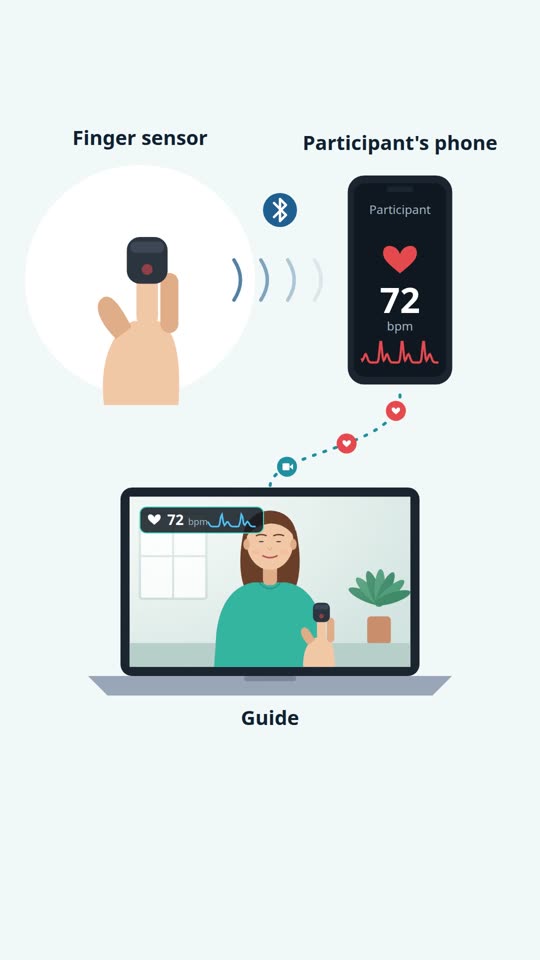
The guide and the participant meet in a video call. The participant’s phone reads the sensor over Bluetooth, computes the values and sends them to the guide along with the video. Nothing to install on a computer; the guide can use a web browser.
 1:04
 1:04
1. Session and invitation
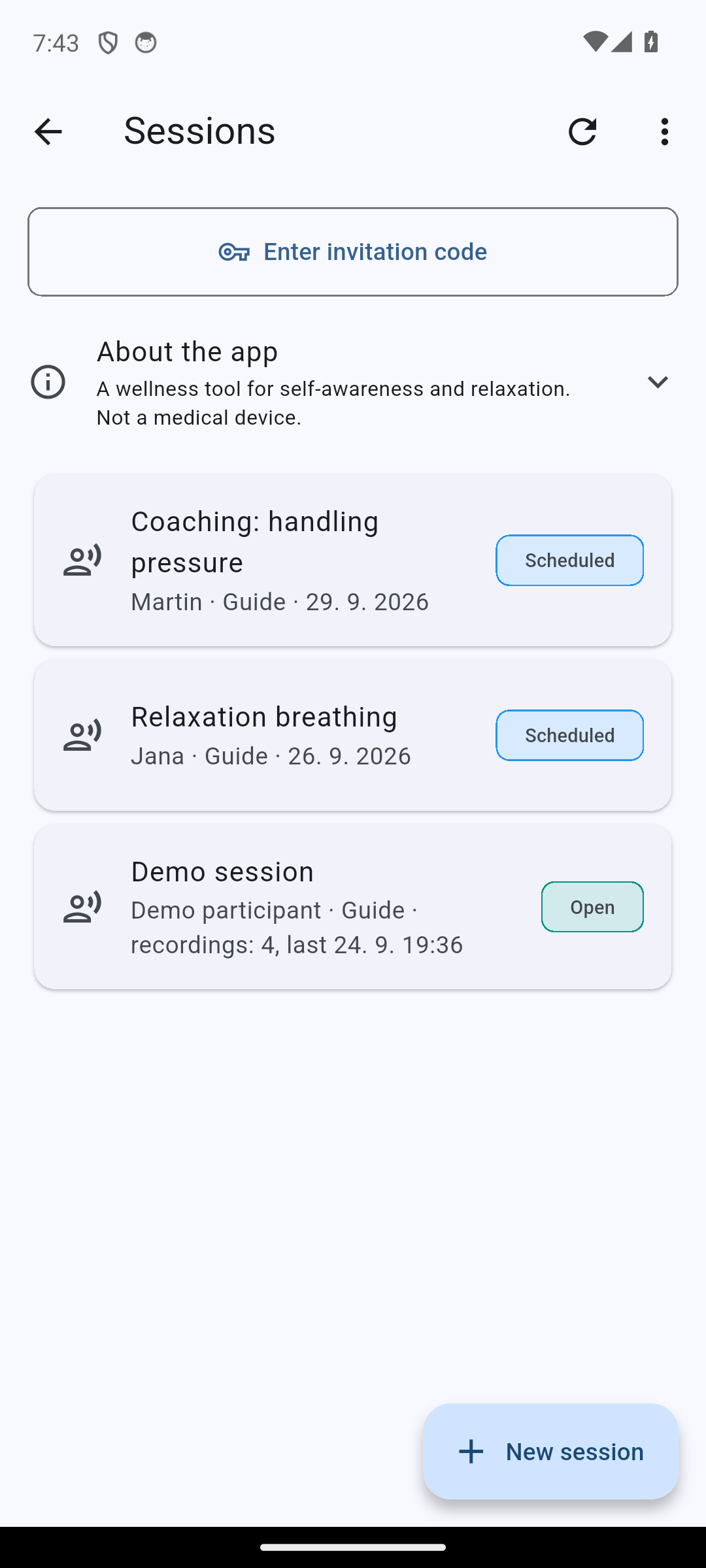
In the app the guide creates a session: a title, the participant’s name, optionally the age (for some indicators) and whether values and video are stored. They get a link and a six-character invitation code.
A session is a room you can come back to. Every meeting in it is saved as a separate recording.
2. Participant consent
Before entering, the participant sees who runs the session, which data will be shown and stored and why. They can decline: the video call then still happens, but no sensors are switched on.
3. In the room
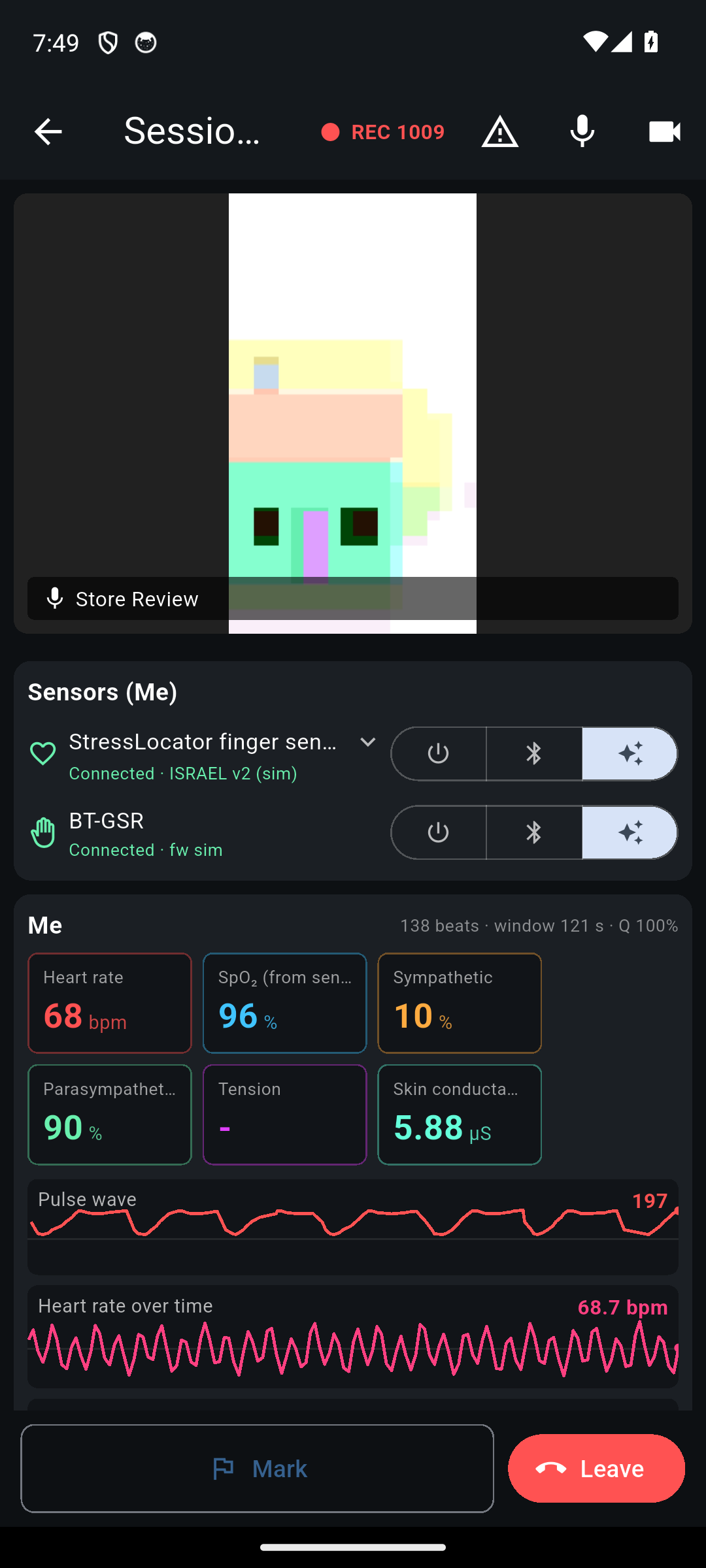
You see the other person full screen and yourself in a small window. Below the video are panels with values: heart rate, SpO₂ from the sensor, pulse wave, HRV and indicators derived from it, skin conductance and charts over time.
The Mark button marks an important moment, for example the start of a breathing exercise. You will find marks in the charts and in the player.
The sensor is chosen in the app from a list of brands and models, each with a “How to switch on” guide. Without a sensor you can try the app in simulation mode.
4. Recordings and player
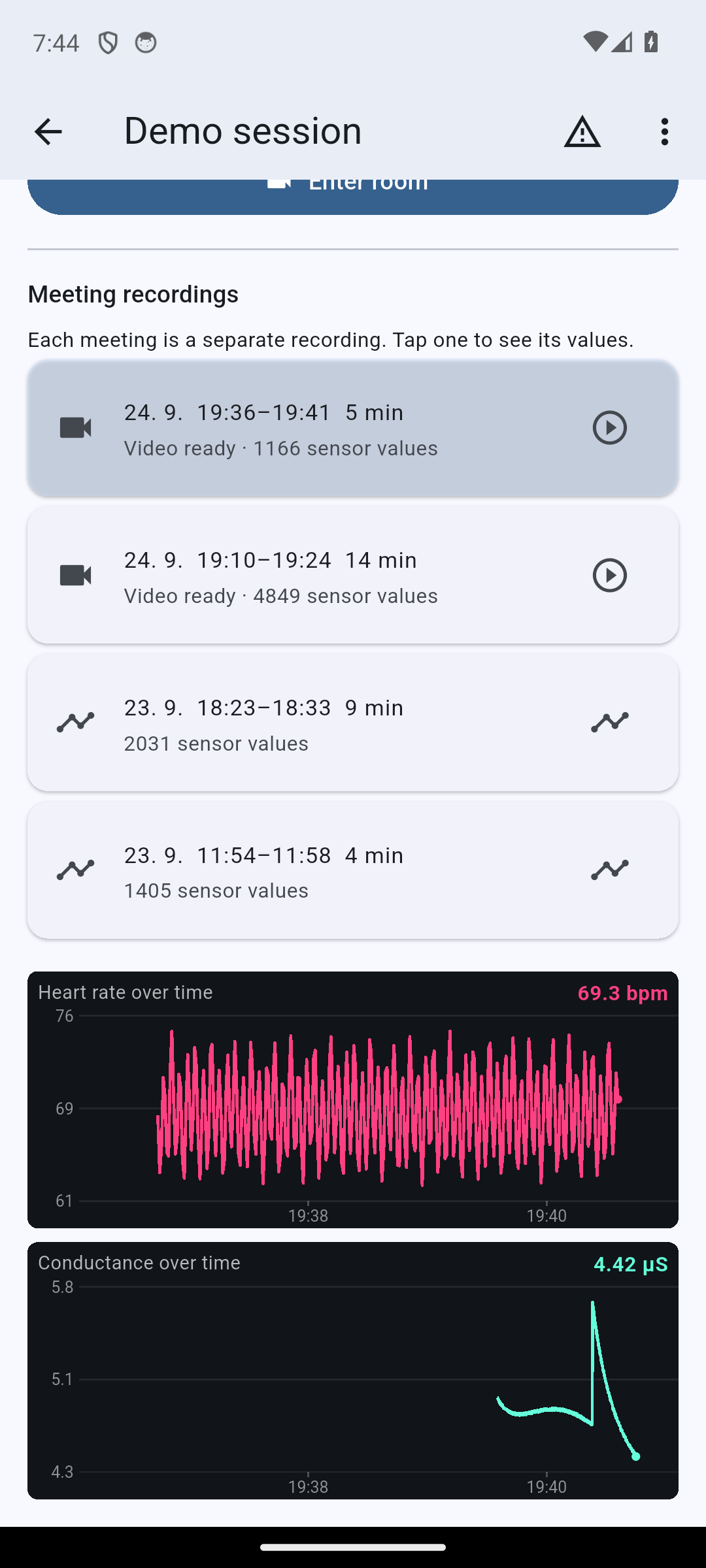
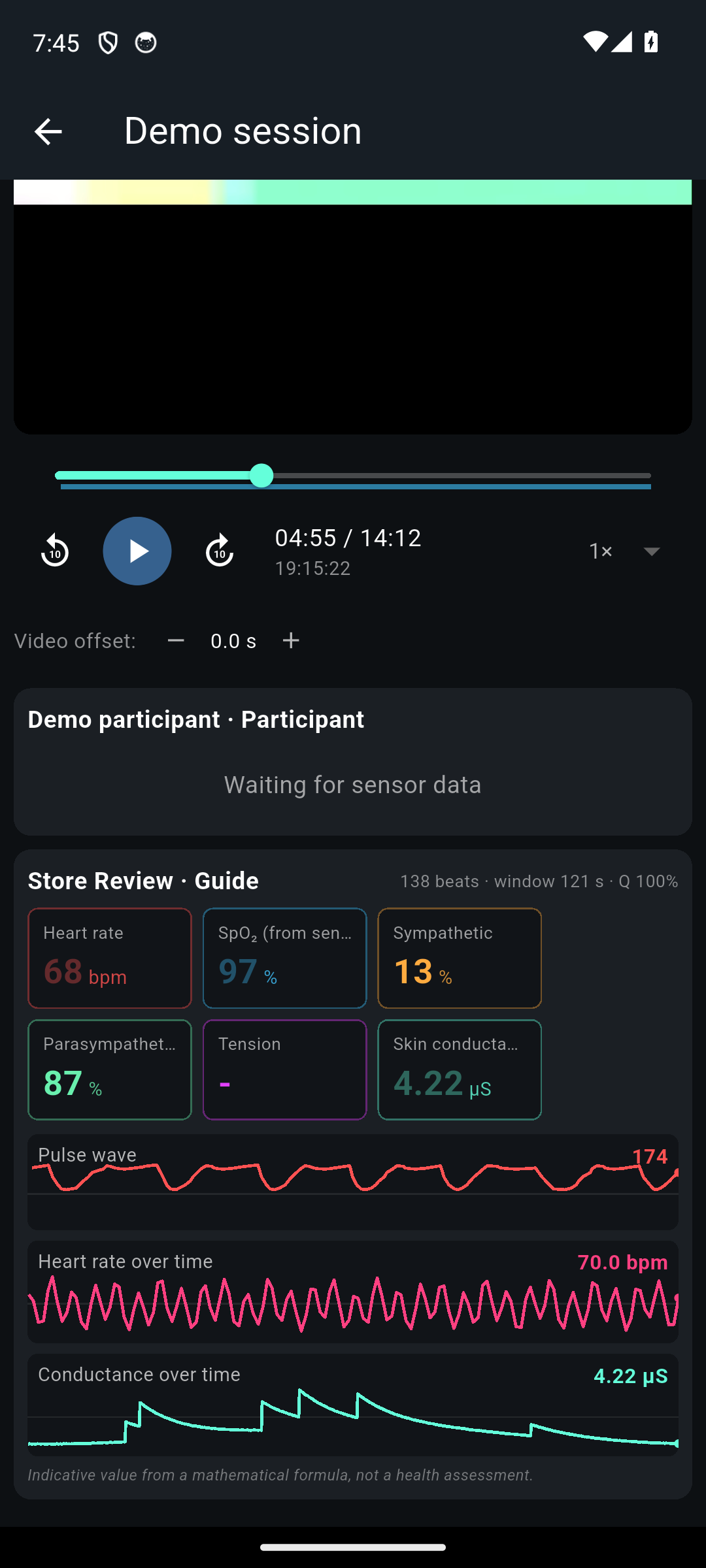
When the room stays empty for two minutes, the meeting is closed and saved. The session detail lists the recordings with date, length and charts. The player puts video and values on one timeline, so for every moment of the conversation you see what the body did.
A short connection drop does not split a meeting. Coming back later starts a new recording.
What the indicators are
- Heart rate
- Beats per minute as sent by the sensor.
- HRV
- Variation of the intervals between beats (SDNN, RMSSD). Needs a sensor that sends the intervals: a chest strap or a finger sensor. Watches mostly send heart rate only.
- Sympathetic, parasympathetic, coherence
- Indicative ratios from the HRV spectrum over the last ~120 seconds.
- Activation index and tension
- Indicative summary values from HRV (tension needs the participant’s age).
- SpO₂ (from the sensor)
- The value sent by the finger sensor.
- Skin conductance
- From the BT-GSR sensor, in microsiemens.
These are indicative values from mathematical formulas for self-awareness and relaxation work, not a health assessment.